
Day 7 – Thursday, December 23, 2021
We wanted to fit as much in as possible, so an early start was essential. We got up about 7:30 so we could leave around 8 and find a place for breakfast. On Wednesday evening we had discussed a game plan and thought about starting at the Chihuly Gardens and Space Needle, but in the end, decided to start with the boat tour and the Underground Tour before getting a Lyft down to the Olympic Sculpture Garden and finishing with a Chihuly/Space Needle one-two punch. It would make more sense to do it that way since the boat tours were more time-sensitive than any of the rest of it.
The first boat tour wasn’t scheduled to leave until 10:45, so we wandered in that direction with the intention of stopping for breakfast somewhere. We indeed found a “somewhere”—a little café/convenience store where we were able to get tea and breakfast sandwiches. (Side note: Why is American cheese considered an acceptable topping on anything? It’s basically unflavored, barely edible plastic.)
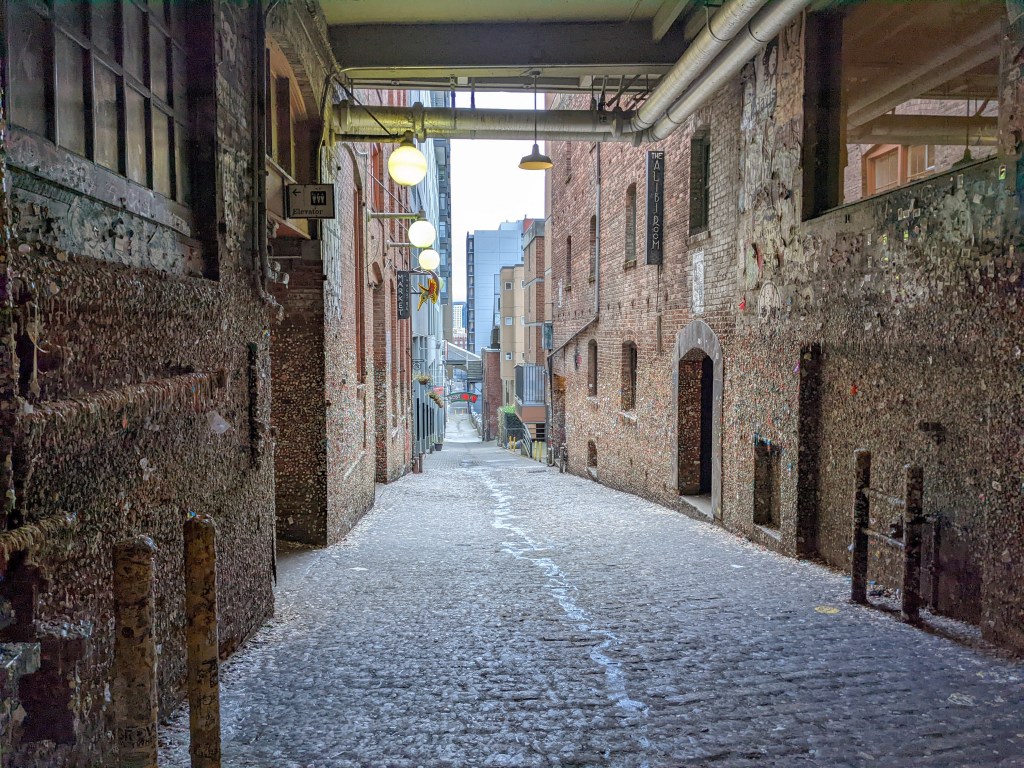
Since we still had time before the boat tour would even let us board (I had used our CityPass to reserve our place for the first tour), I thought it might be a good idea to wander down 1st Street and go past the Pike Place Market again in the daylight. It was definitely a more representative experience, though we didn’t go into the market proper. We passed by a map shop where we both gawked at the window displays, and I resisted the urge to get more tea and a crumpet. One thing I like about Google Maps is that it often has tourist attractions or popular photo opportunities marked on it—like the Gum Wall (which at this point should just be called, like, the Gum Alley or the Gum Passage).
We still got to the pier with time to spare, so more wandering ensued with a quick jaunt into a souvenir shop for a small carrying bag, more postcards, another magnet, a warm hat for Mom, and a Sleepless in Seattle sleepshirt.
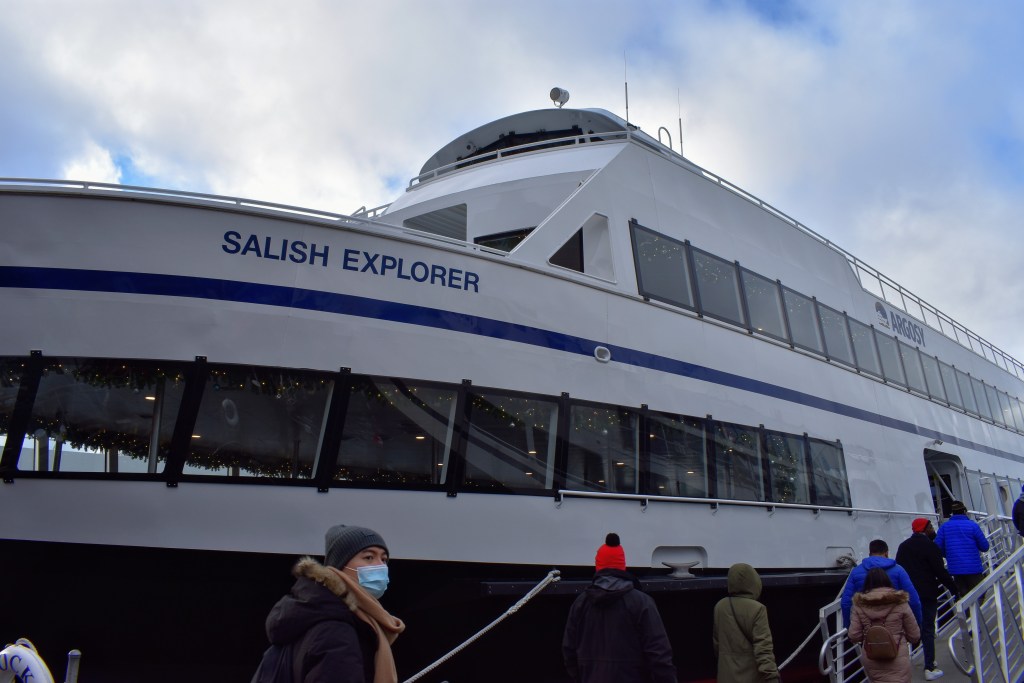
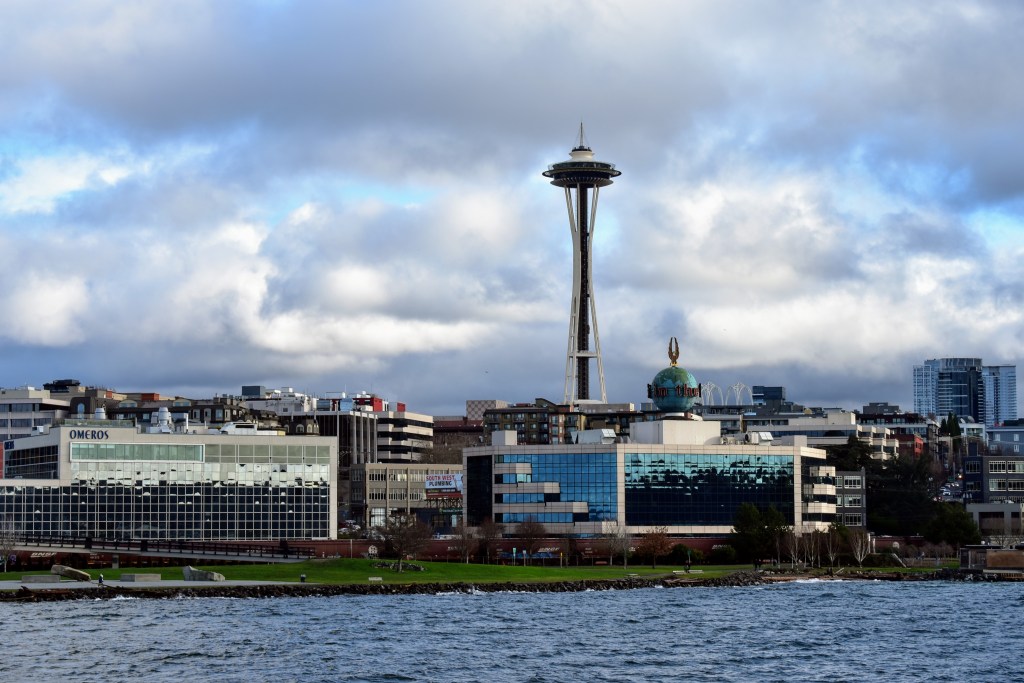
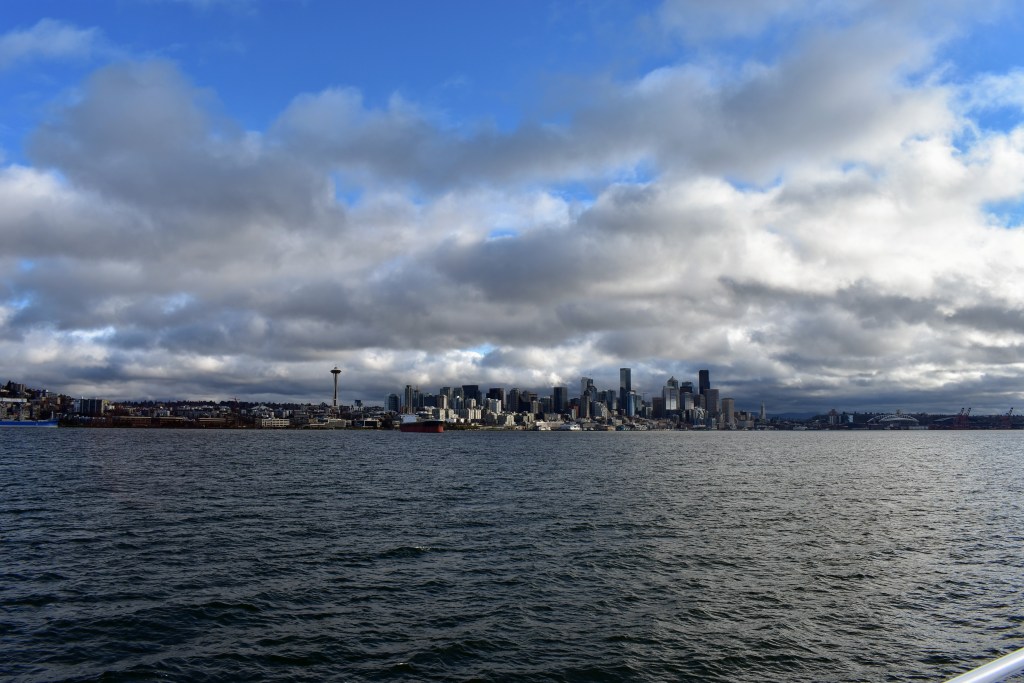
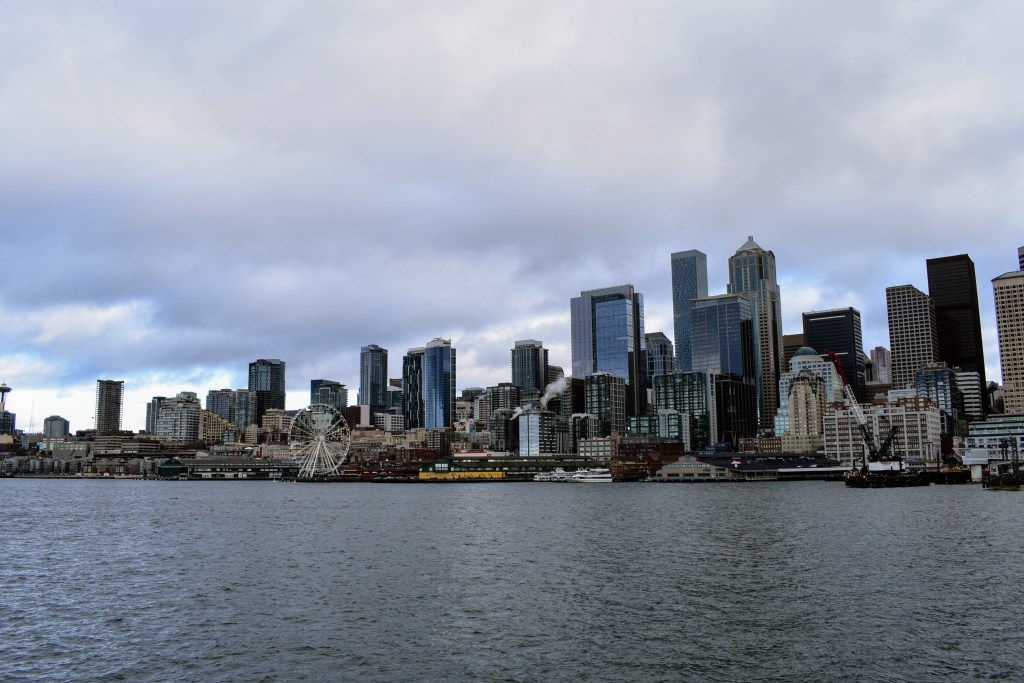
We finally boarded the boat (the Salish Explorer), Mom satisfied that it had interior space and restrooms, and prepared for the first tour of the day. The boat had three decks: two with lots of indoor seating, one of which also had a small café, and the third was the open-air top deck. Mom elected to stay on the middle deck, inside, with most of the rest of the passengers and I ventured out to the top deck where I could get photos from both sides without too much trouble and without any spots or glare from interfering windows. Our tour guide, Hesper, was very knowledgeable about pretty much everything we saw. The tour started by going up the coast of Elliott Bay, past the skyline of the city. We were regaled with information about the various buildings and sites, like the Smith Tower, Seattle’s first skyscraper and home to a $17,000/month penthouse (which comes with a reading room in the ball at the top of the pyramid which makes up the penthouse). The famous Edgewater Hotel, where the Beatles were photographed hanging out of their room windows with fishing poles, was initially planned to open for the 1962 World’s Fair, along with the Space Needle. While the Space Needle was finished just in time (and was in fact dedicated the same day the fair opened), the Edgewater was not quite so lucky. It was delayed by issues with building so long (it was being built out over the water after all) that it only opened a couple of weeks after the fair had closed. Because they weren’t able to take advantage of the millions of fairgoers coming to the city, they came up with the gimmick of giving guests fishing poles so they could fish from their bedroom windows. Without adequate space to clean their catches. Great idea.
Pier 56
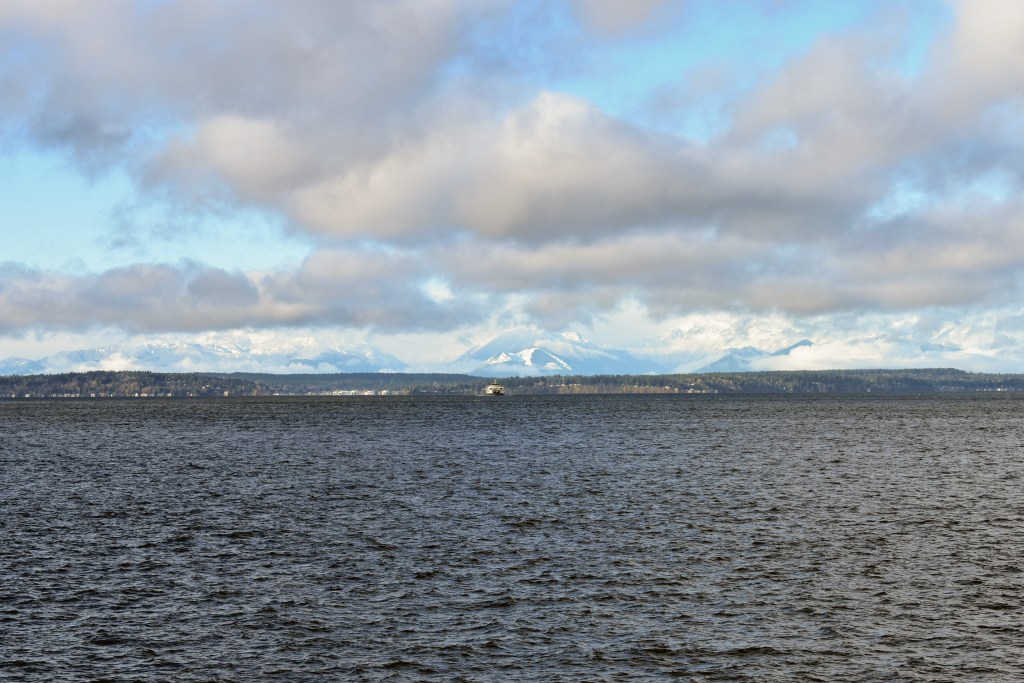

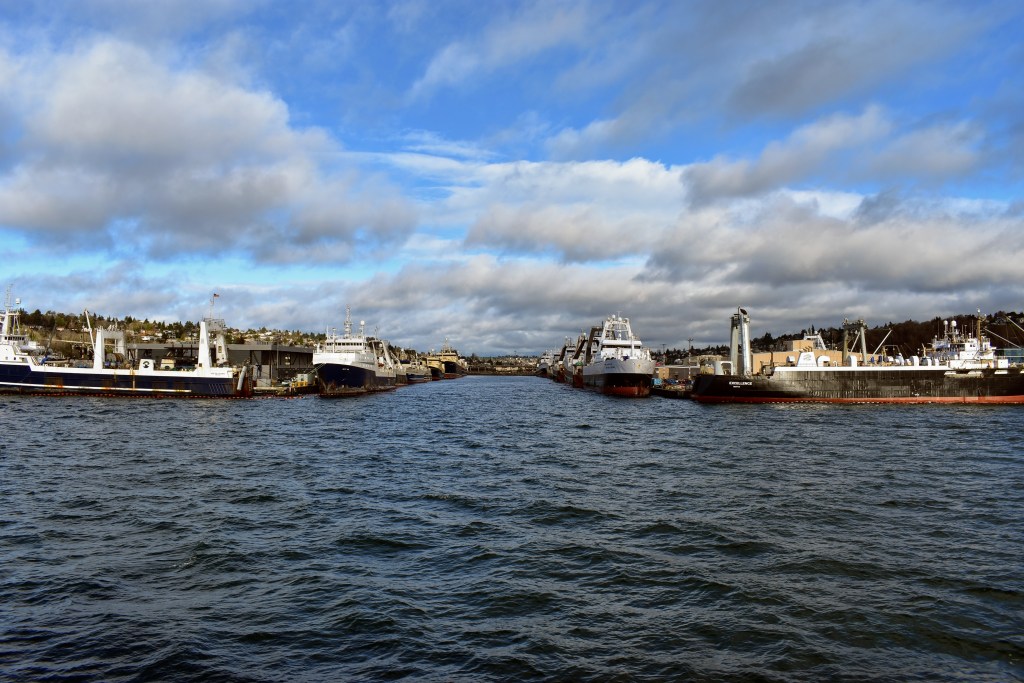
As we sailed up the east side of the bay, around the top, and then back down the middle of the bay, and back towards the ship loading area, we saw lots of boats and ships. We saw cargo ships, we saw Alaskan fishing trawlers, we saw ferries. Of course, a lot of industry in Seattle centers around the bay and shipping—in fact, the markets in Asia ship to and from Seattle for anything going to or coming from any further than the west coast as Seattle is a day’s sailing closer to Asia than anywhere else on the mainland. Lots of grain getting loaded onto cargo ships there. We also saw some vessels in dry dock, with California sea lions hanging out on the floating barrier around it, as well as container ships being loaded and unloaded with massive cranes. The containers that would fit on one ship would make a 30-mile long train. The California sea lions, Hesper informed us, that we were seeing were the losers. The males would compete for beach territory in California, so only the ones who lost those fights would migrate to Seattle over the winter to fatten up and get ready to try again the next year.
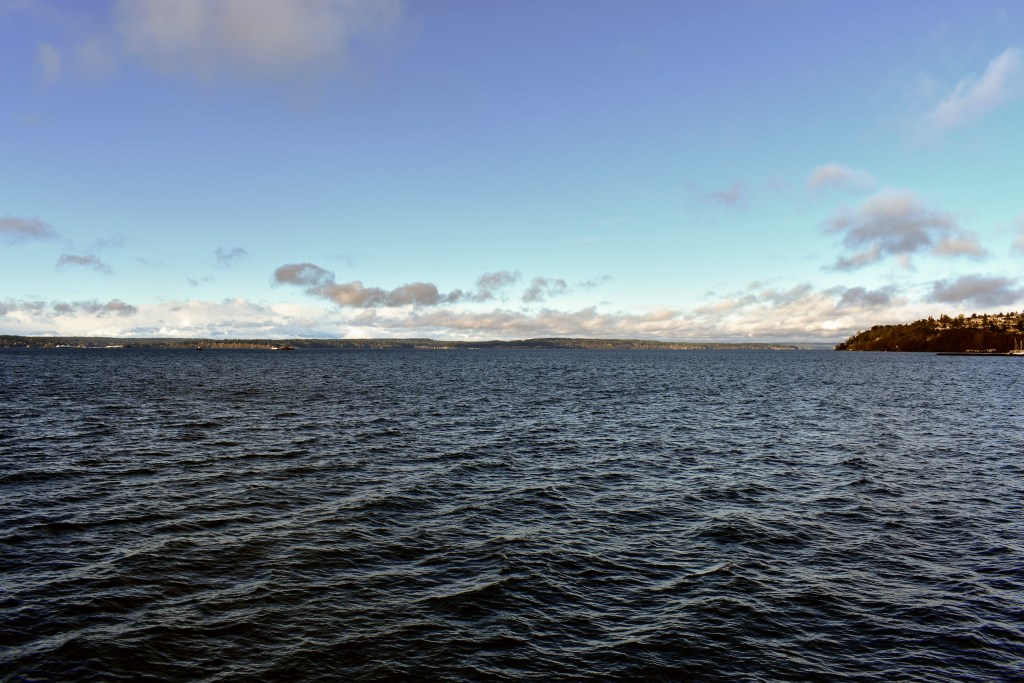

After gawking at the huge container ships and massive cranes, we headed back to the pier. Hesper told one more story that really caught my interest. Apparently, in 2011, the Seahawks (I have it on good authority from the train conductor on the Empire Builder that “nobody likes the Seahawks, go Rams”) were playing somebody or other. At the same time, there were some researchers from the University of Washington downtown with seismographic equipment getting some readings because Seattle sits on some fault lines. Well, apparently Marshawn Lynch (known to me only as a guest star on “Brooklyn Nine-Nine”) decided to run a 67-yard touchdown that day. Keep in mind that the stadium is built like a giant clam, so noise gets amplified. The seismographic instruments began to go wild. The cheering and stomping and yelling from the crowd that day registered as more than a 2.0 on the Richter scale at its height. Since then, seismographic instruments have been installed in the stadium itself so that the crowd can see how loud they are in real-time. Neat!
After getting off the boat, we walked a few blocks to Pioneer Square in order to take the Underground Tour. This tour was a bit more flexible with a group leaving every hour. We got there at 12 on the dot and were able to join that group. The tour itself focused on the founding of Seattle (by white settlers—there had already been native people on the land for hundreds of years) and all the issues they ran into. It basically boiled down to the fact that the first white settlers started staking out their land at low tide and were unpleasantly surprised to find their claims flooded later when the tide came in. But they stuck with it, built a sawmill, and started cutting down trees. As the city grew, apparently no one ever thought to, y’know, build a wall or levee or something to keep the tide out, so the water was always playing havoc with construction, sewers, and their new toilets. Then the city burned down. At least, 33 blocks of the commercial district did. No one died, thankfully.
When they went to rebuild with brick buildings, the city was eventually persuaded to do something about the terrible water lines, sewage lines, and the water constantly coming in with the tides. So what they decided to do was raise the street level to the second story of these buildings, which also meant building a wall at the water’s edge where the street ended. And, voilá! Several problems solved at once!
Anyway, this tour went into several areas where the first stories of these buildings are still accessible, under the current street level. It was pretty cool to see the difference in brickwork on some of the buildings, after all, why would you waste fancy brickwork on the first story if it was going to be more of a basement level before long? We also heard about how much of this was funded: by the taxes paid by Madame Lou and her “seamstresses.” Nudge, nudge.
After the Underground Tour, we wandered back up 1st Street to Pike Place Market in order to visit that map store. We got books and a small illustrated poster of the National Parks! From there we decided that the Olympic Sculpture Park was close enough to walk to and we had plenty of time.
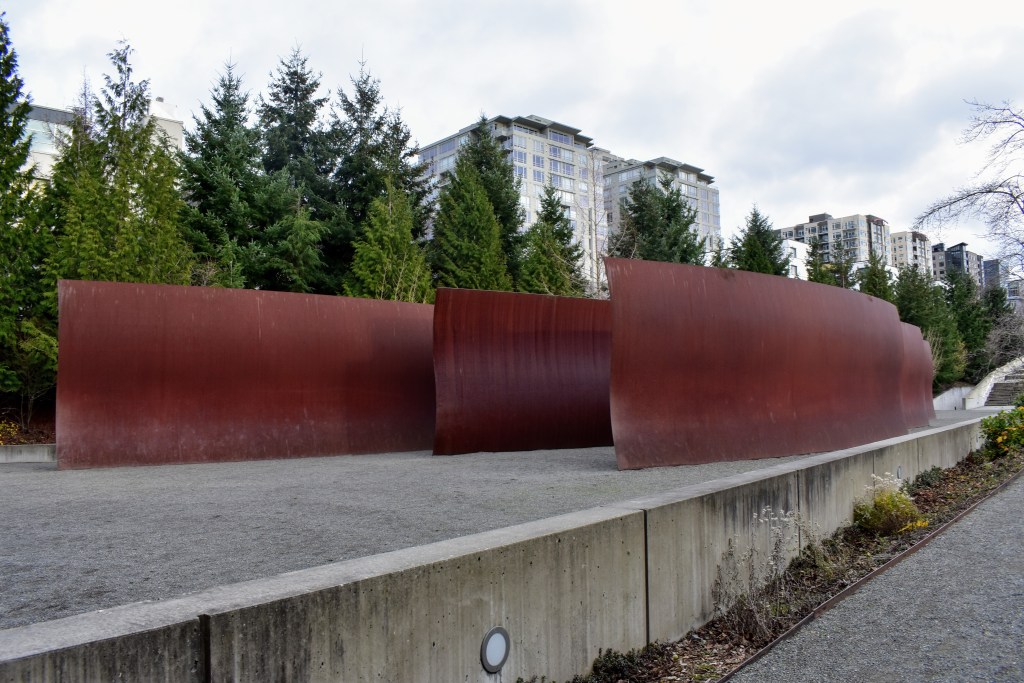
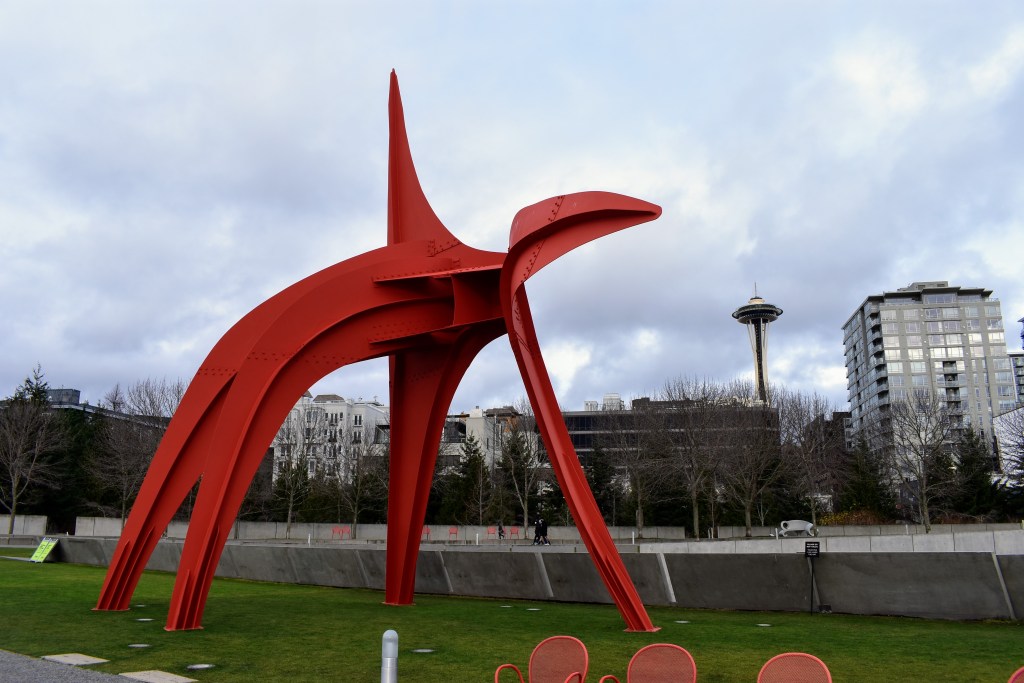
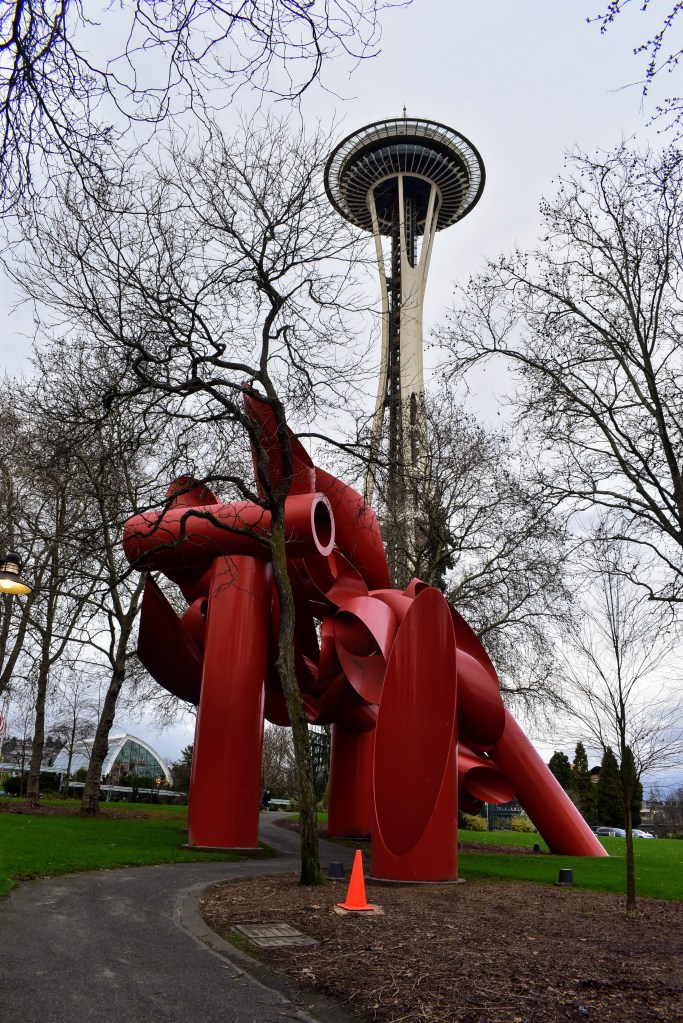
The sculpture park was wonderful. Full of art of different sizes as well as areas for native plants. There were several large installations, like Wake by Richard Serra, which immediately reminded us of the shapes of the cargo ships in the bay, and Seattle Cloud Cover by Teresita Fernández. But we especially liked Calder’s Eagle (we’ve seen two of what I’m calling Calder’s aviary now!) and Split by Roxy Paine, which was a large aluminum tree. We could have spent a lot more time there and both agreed that there ought to be more spaces like it, where art and nature come together in public spaces where people can walk or sit or picnic or whatever.
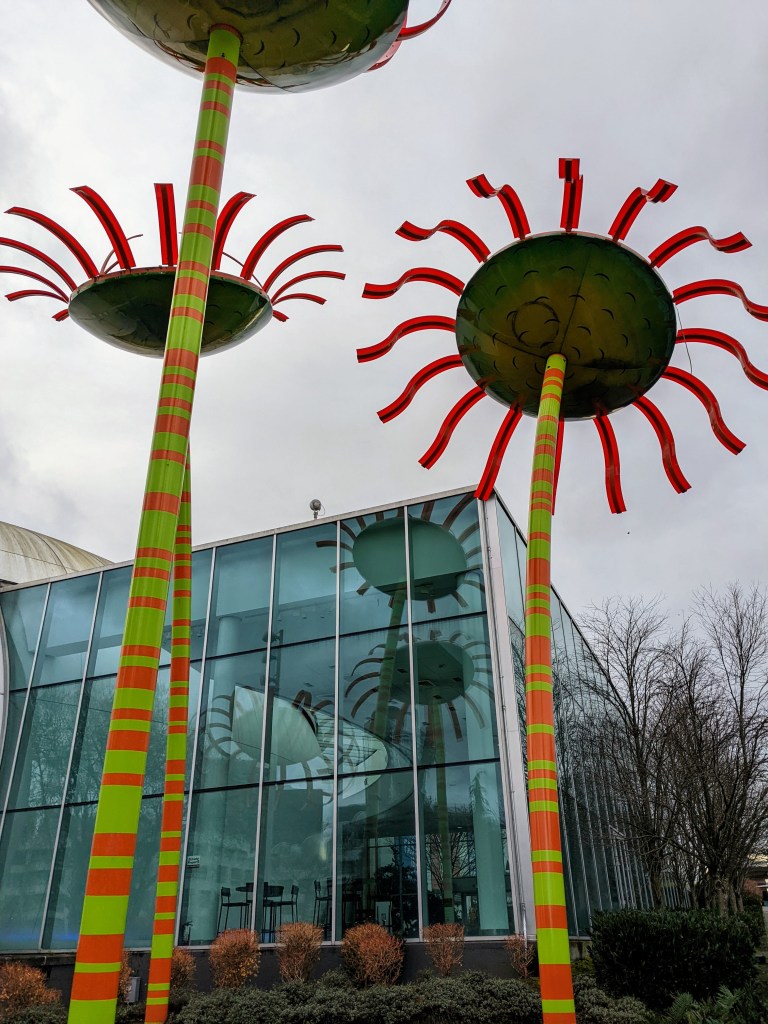
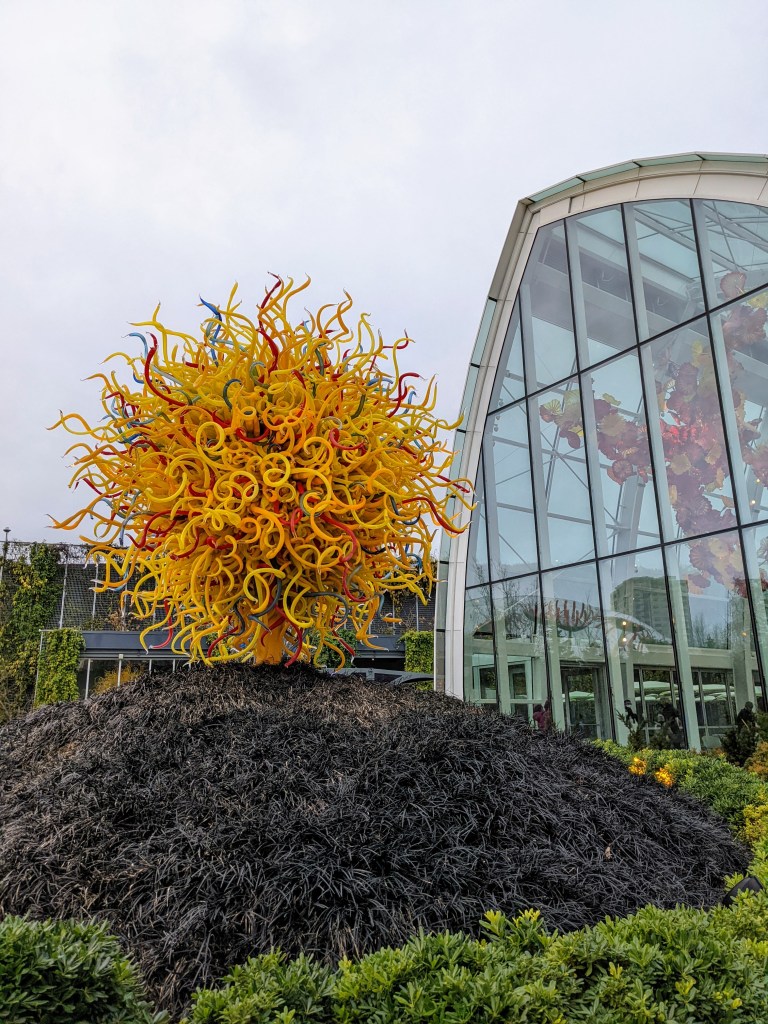
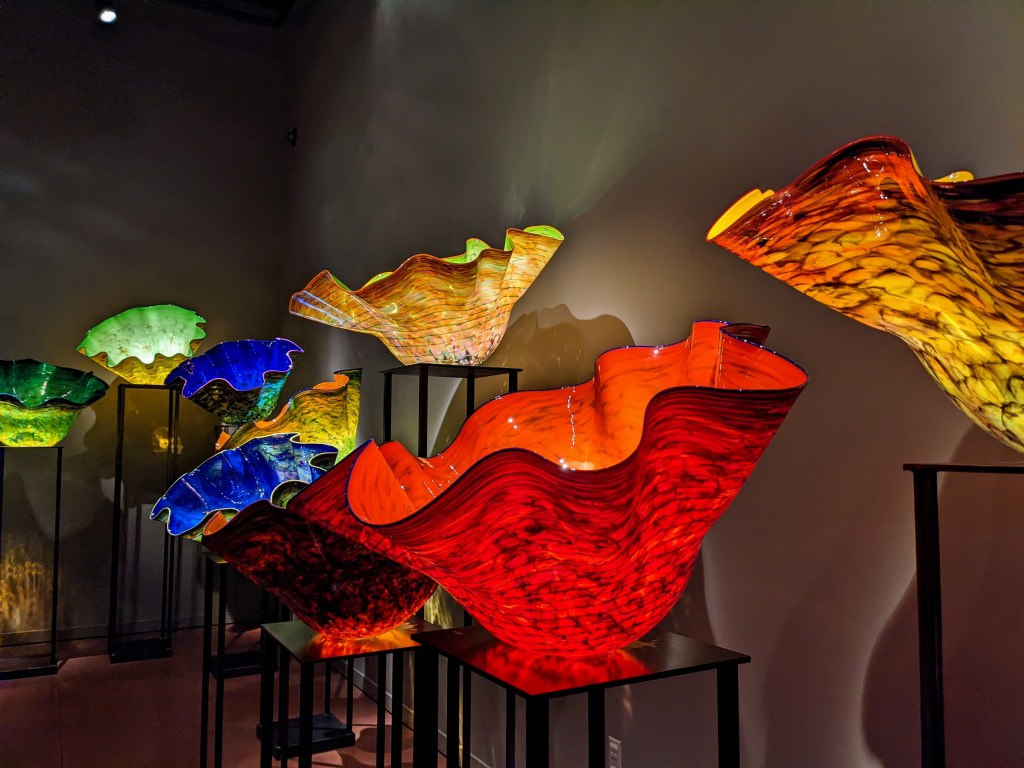
We walked up Broad Street a couple of blocks and got to the Seattle Center, home to many things but most notably the Space Needle. However, our first stop was the Chihuly Gardens and Glass. We marveled over the pillars, chandeliers, balls, and reeds that comprised many of the works. Of course, we had to linger over the display of Macchia and stare in awe at the Persian Ceiling and the display of light as it filtered through the different glass pieces. We came to the conservatory and the huge, suspended piece down the center. We took our time in the garden, looking at all the different colors of reeds and balls both on bright display and hidden amongst the plants. We also saw a real bunny rabbit! Of course, many places have reduced the services that they are providing right now (due more to COVID than the holidays), and this included the Collections Café at the back of the museum. But you could still walk through the café and look at the displays of different things that Dale Chihuly has collected through the years. Yes! He is a collector and not a hoarder! You can tell because things are organized and displayed, *wink.*
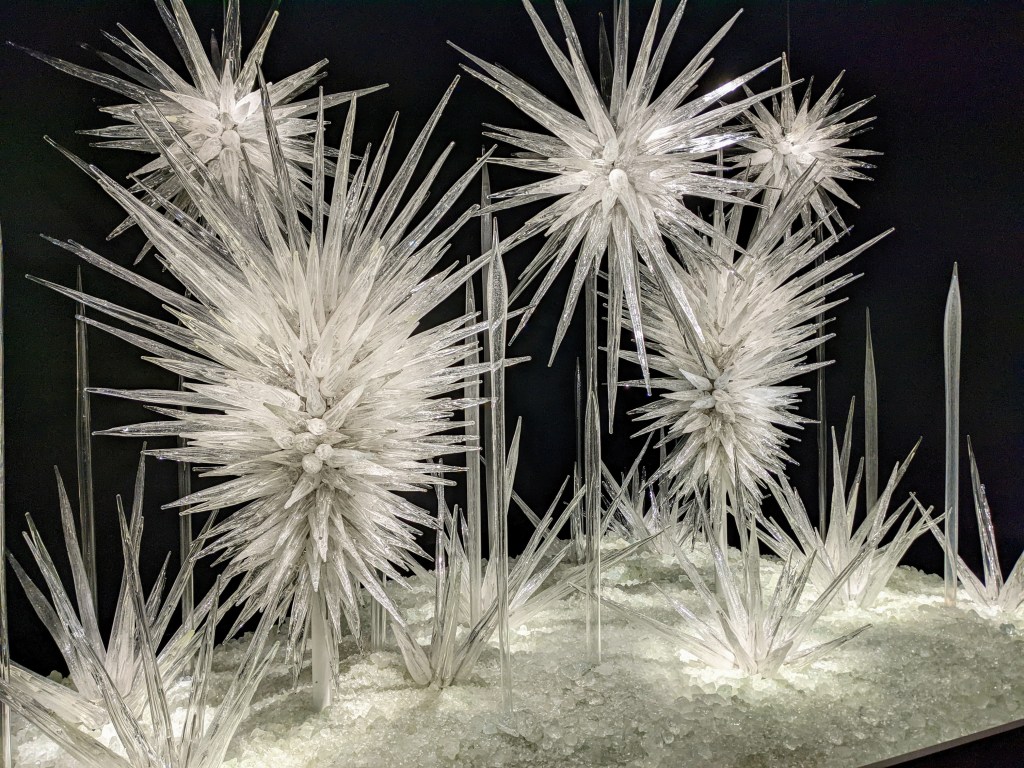
Chihuly Gardens and Glass
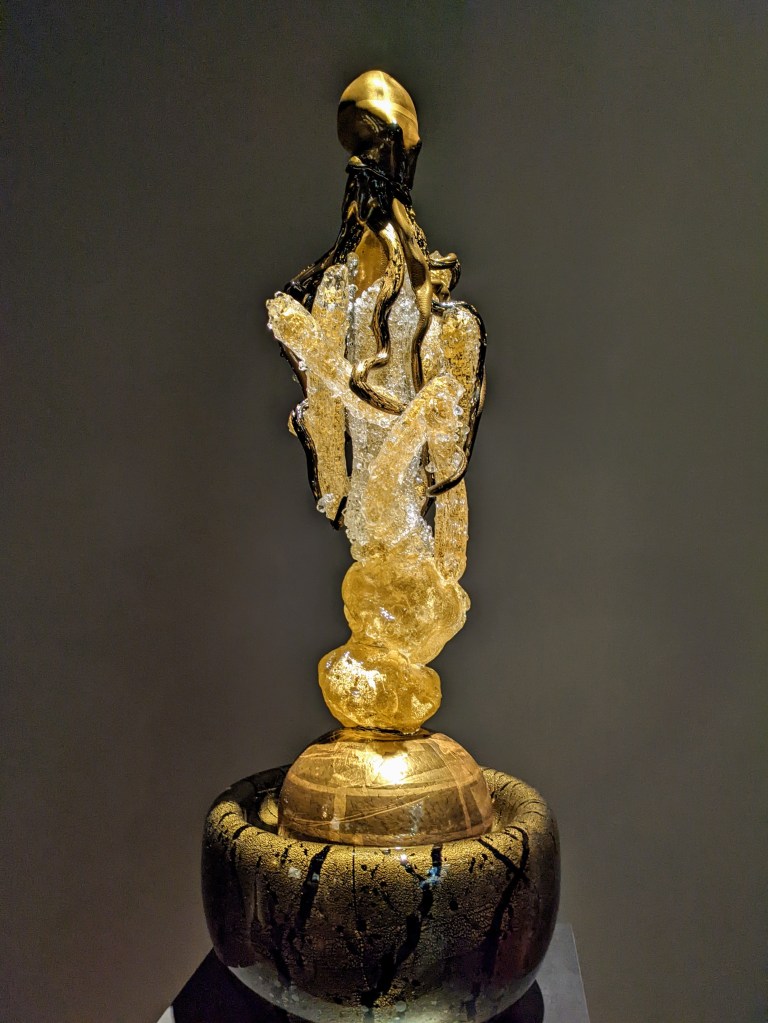
Chihuly Gardens and Glass
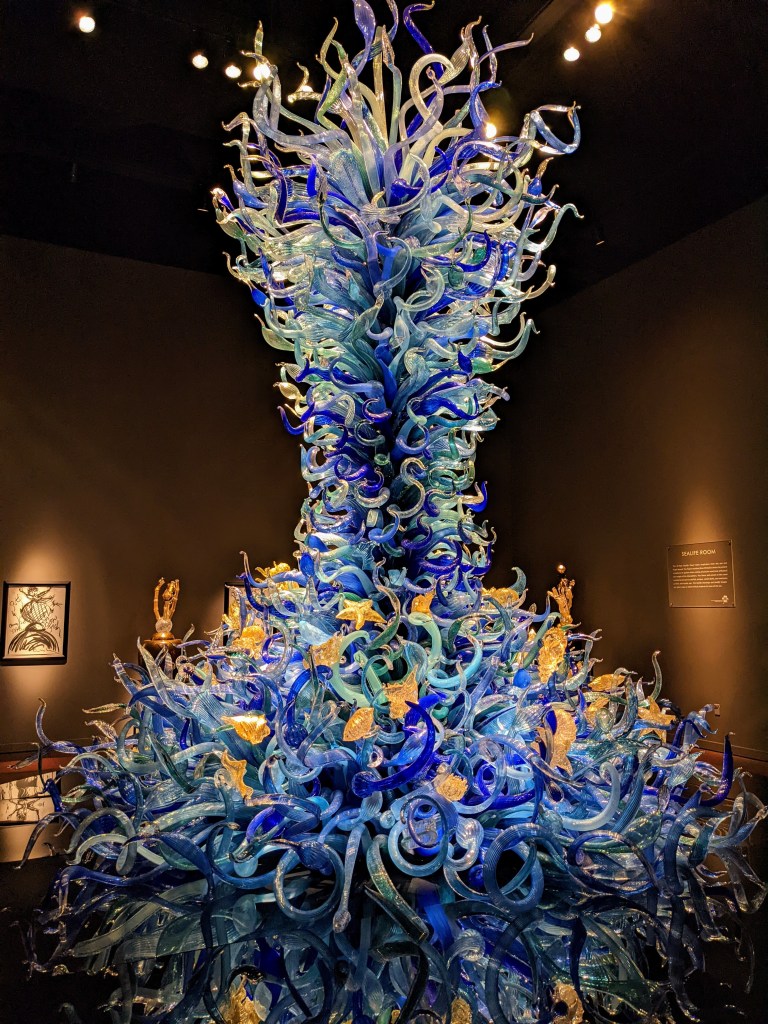
Chihuly Gardens and Glass
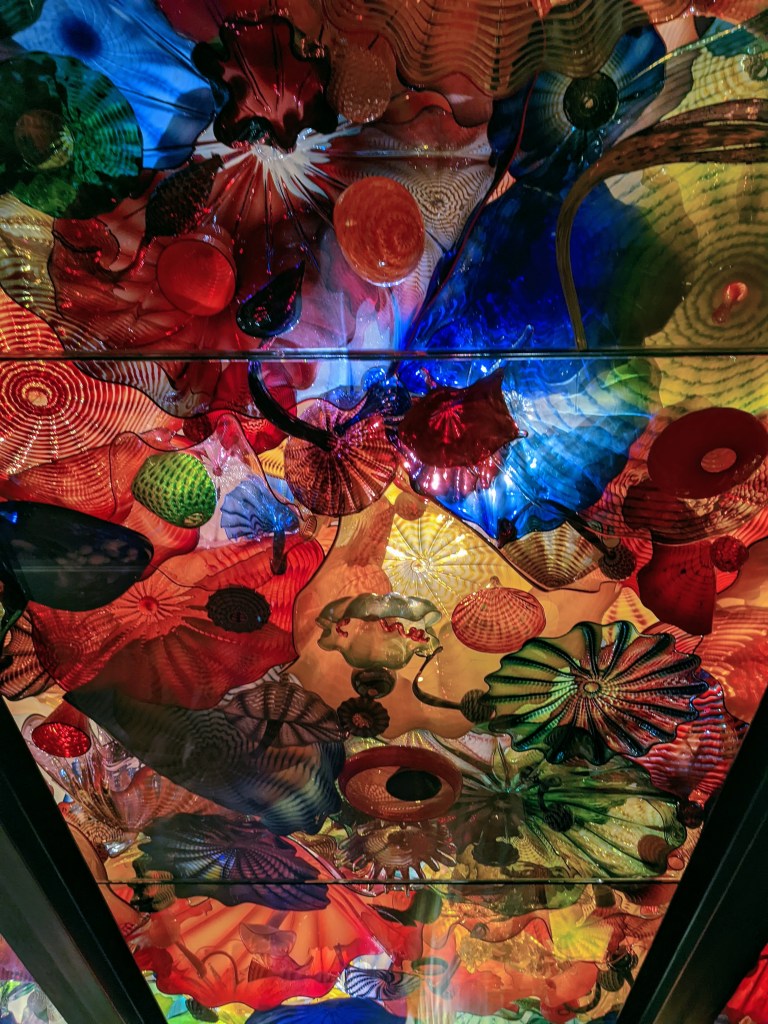
Chihuly Gardens and Glass
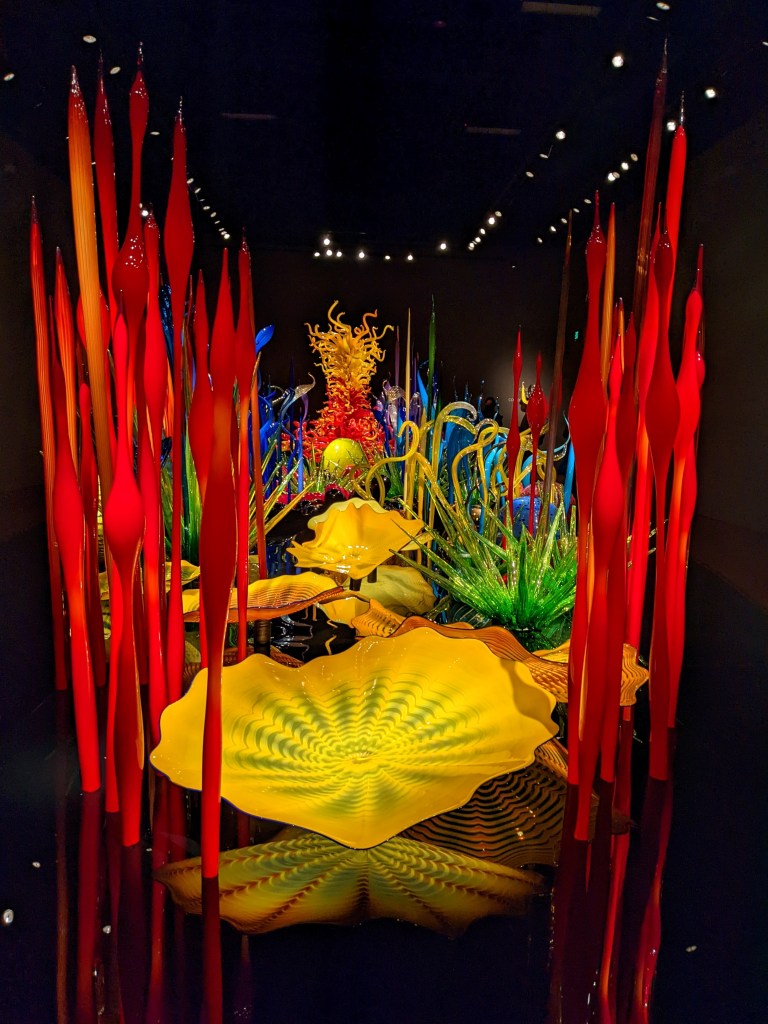
Chihuly Gardens and Glass
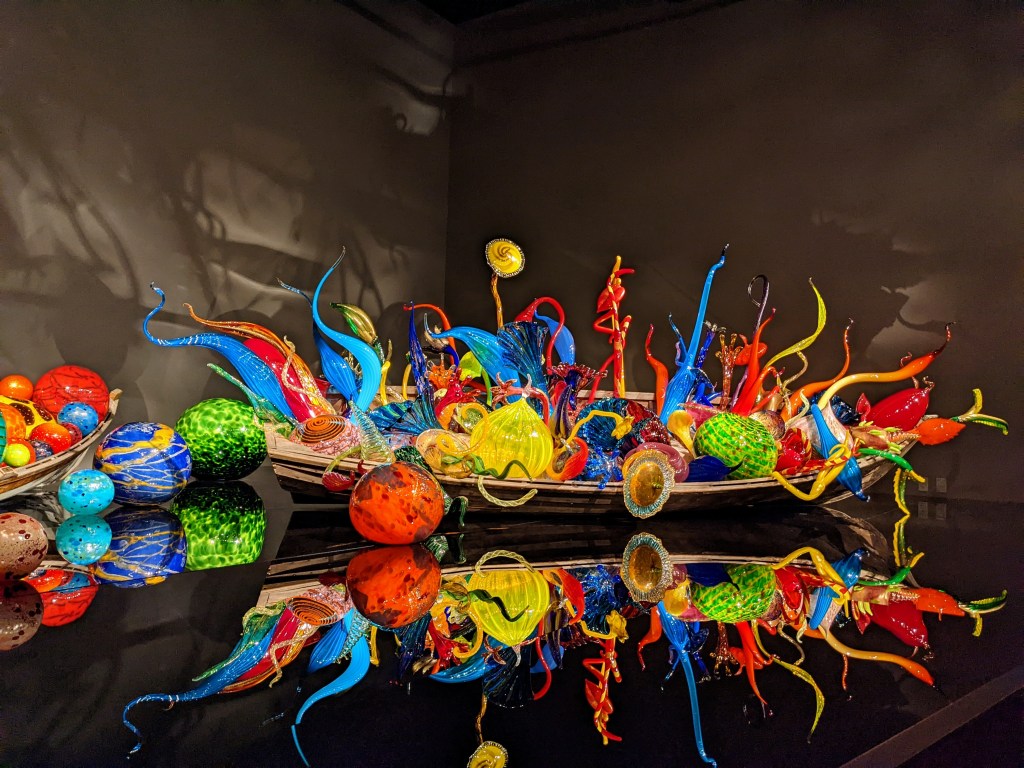
Chihuly Gardens and Glass
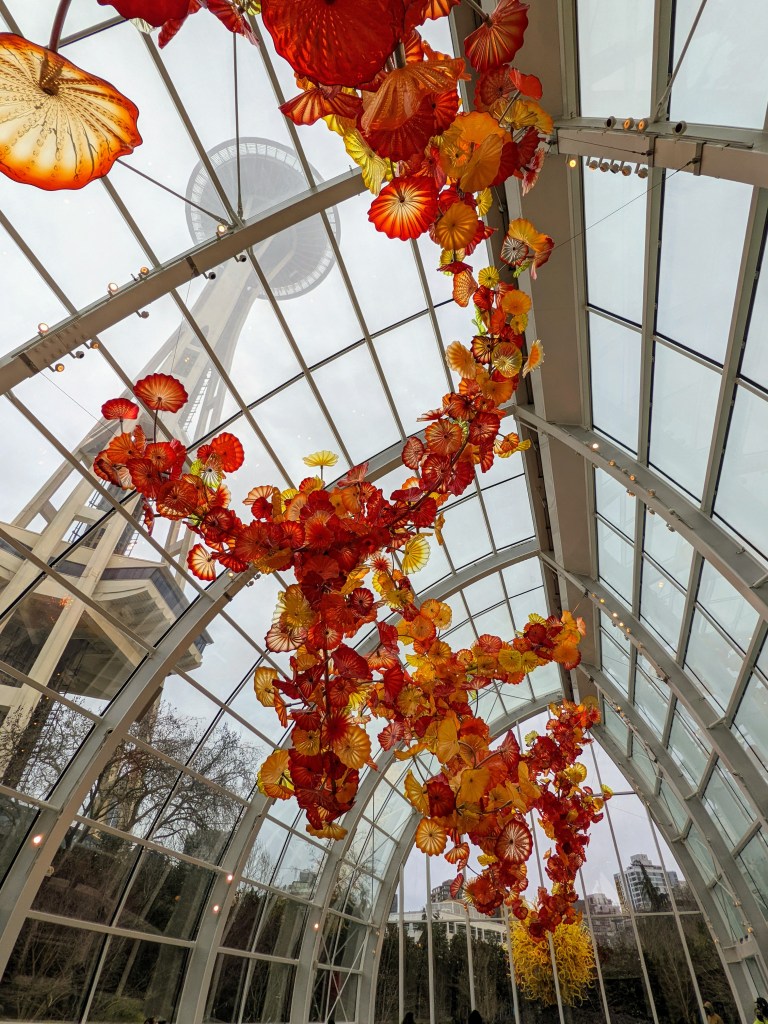
Chihuly Gardens and Glass
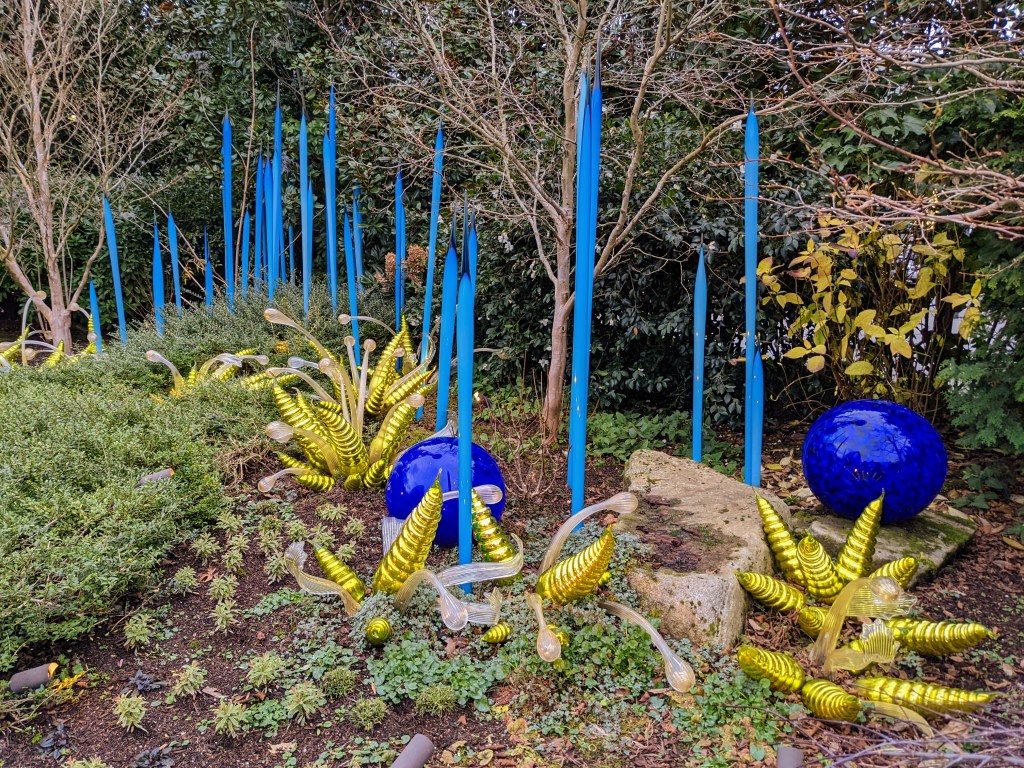
Chihuly Gardens and Glass
Chihuly Gardens and Glass
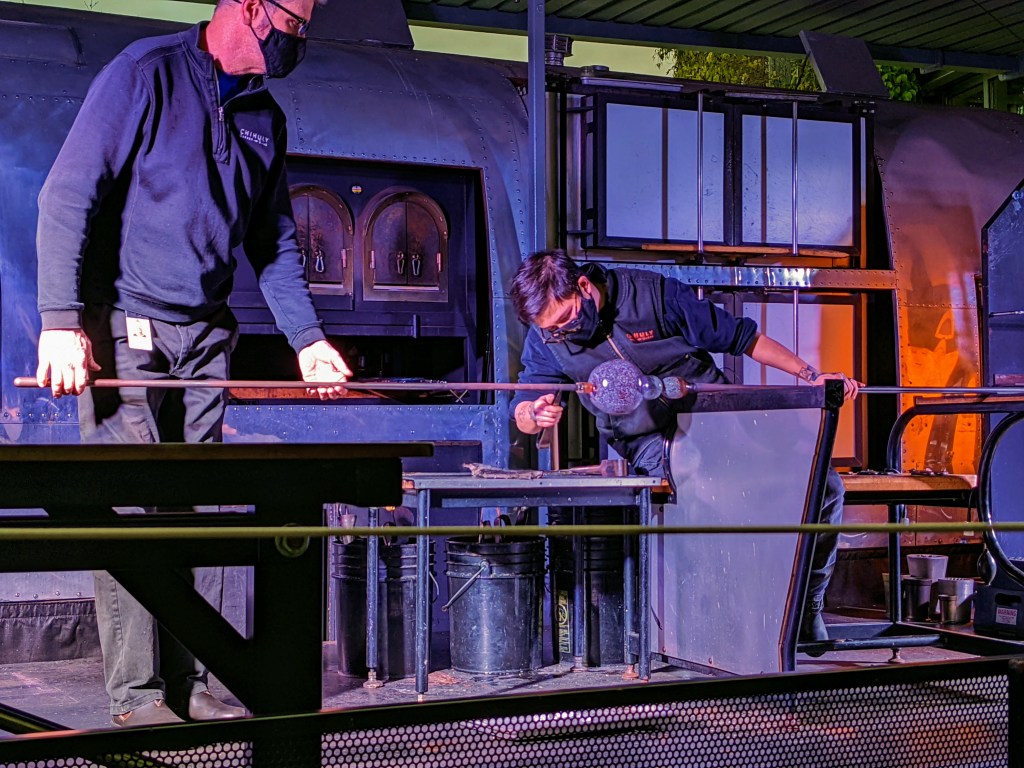
We finished our visit to the Gardens and Glass with a narrated demonstration of glass blowing and sculpting at the Community Hot Shop. It was fascinating to see a ball of liquid glass be transformed into a vase. The technique used involved using frit, small pieces of colored glass, to add color to the vase. It gives the final piece a speckled look. Chihuly used layers of frit for the Macchia pieces, with a layer of chunky white in the middle, to get the amazing color variations in those pieces. The different vases and bowls made in the demonstrations are all sold in the Space Needle gift shop in order to raise money to support local artists.
Chihuly Gardens and Glass
Chihuly Gardens and Glass
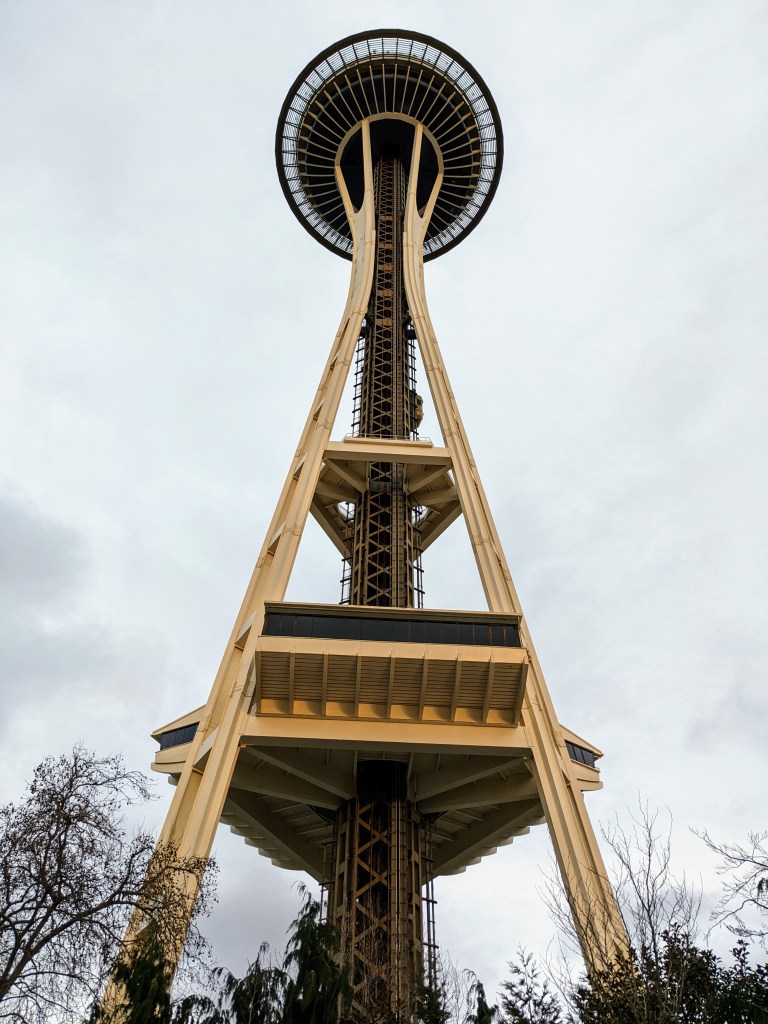
Our final stop of the day was…the Space Needle! We weren’t able to get a ticket for immediate access, so we poked around the gift shop for a while, then wandered around the Seattle Center area, and into the Seattle Armory food and event center. Most food spots had already closed at that point and we decided that we’d probably be too tired to do much of anything except go back to the hotel once we were done at the Space Needle, so we decided that we’d probably just get dinner at the hotel again.

Space Needle Loop
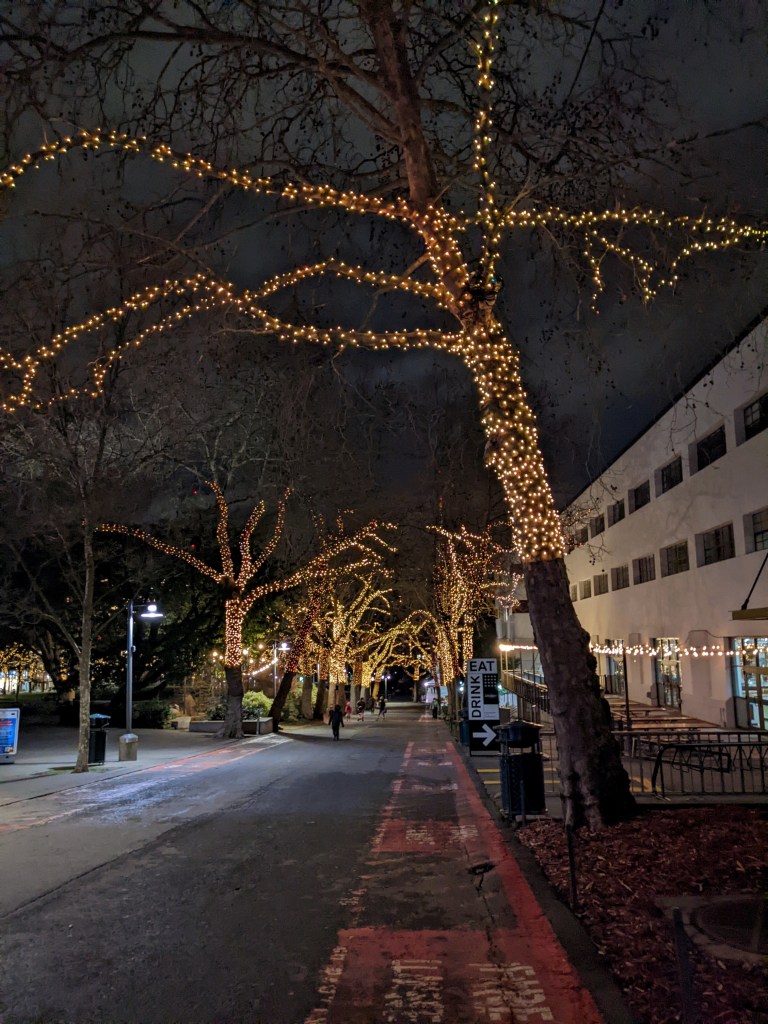
Seattle Center
Once we were within about five minutes of our ticketed start time, we were allowed to make our way into the Needle. We passed a bunch of informational displays on the building of the Needle. I had had no idea that it was erected so quickly, basically in the span of a year. We got on an elevator and were whisked to the top!
The area of the Needle open to the public comprises two floors at the top: the bigger deck above, with angled glass, so that you can almost lean over the side of the tower, and the slightly smaller deck with the rotating floor that has glass panels in it so you can see down the curved sides to the base. We walked around the top deck and found that the Atmos Café was open and serving food as well as drinks. So we ended up having dinner at the top of the Space Needle! A hot dog for Mom, chicken tenders and fries for me (with a delicious, curry-like dipping sauce), and Honeycrisp ciders for both of us. Yum!
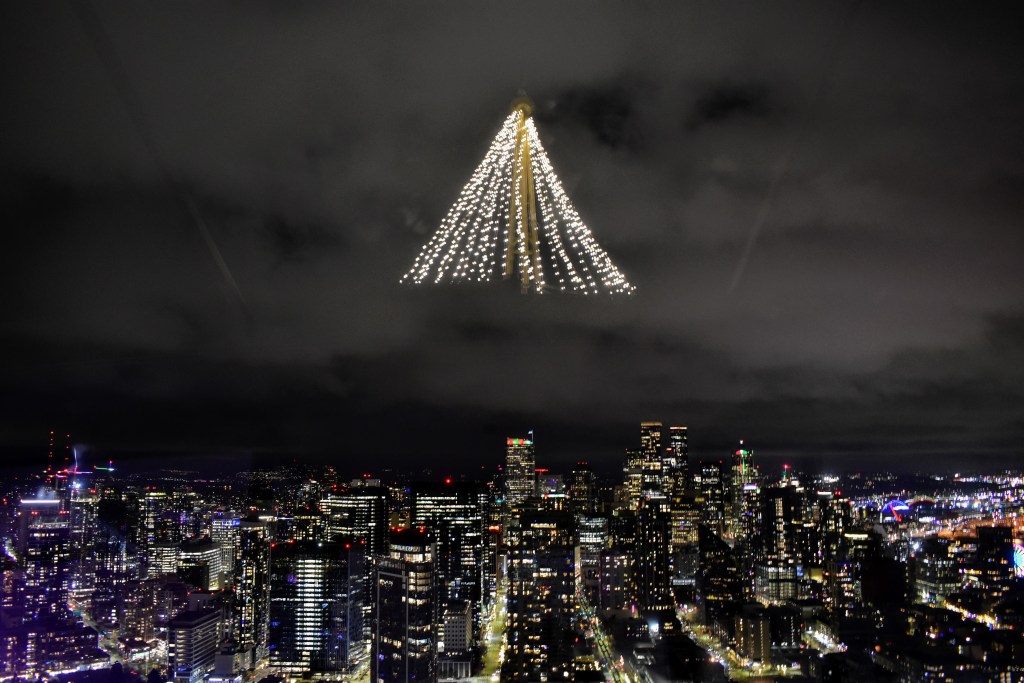
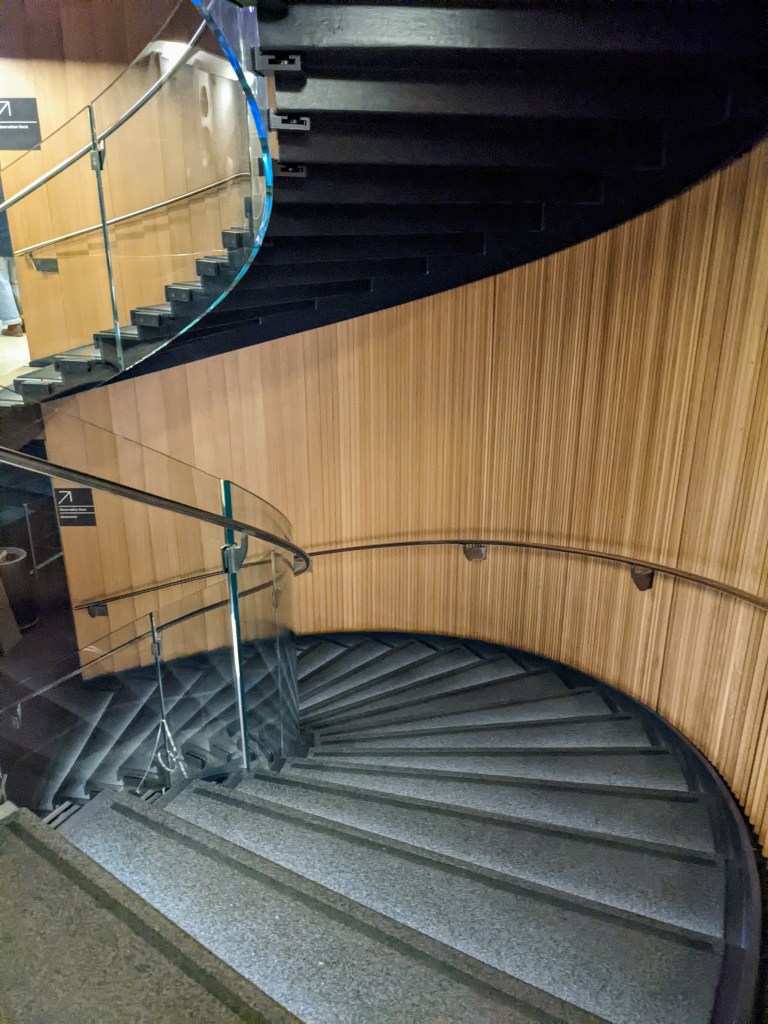
We walked down to the Loupe Deck and were able to not only watch as the skyline of Seattle slowly circled by, but we were also able to see the cog mechanisms that rotated the floor! The rotation is powered by a 1 horsepower motor, which is pretty amazing!
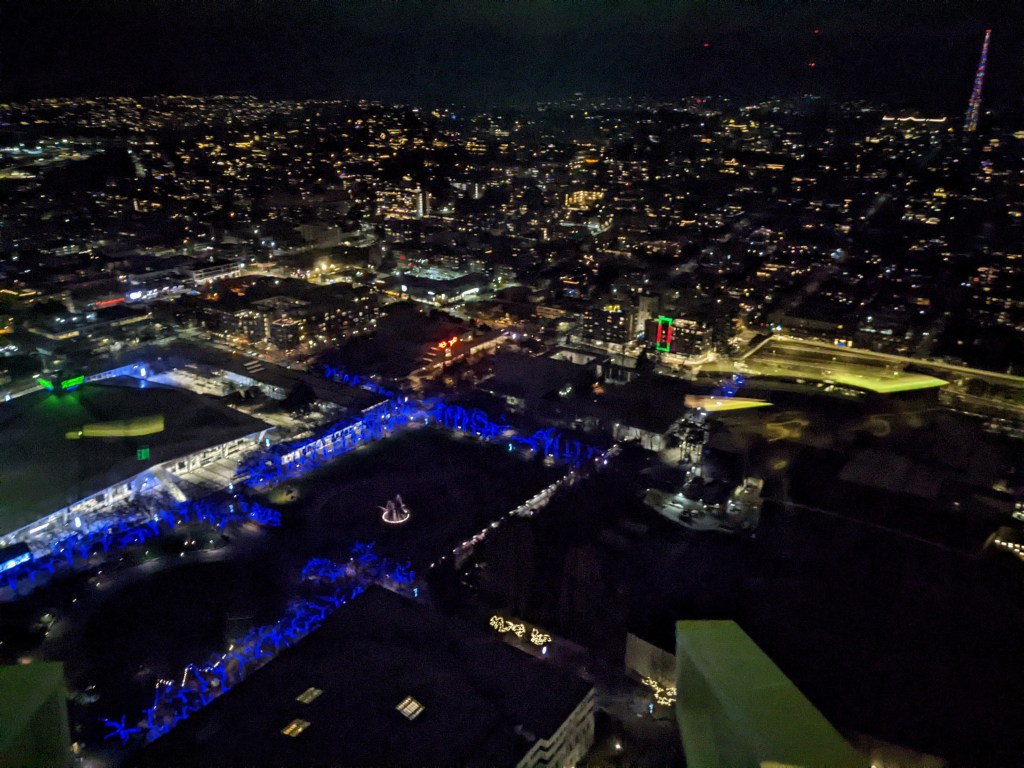
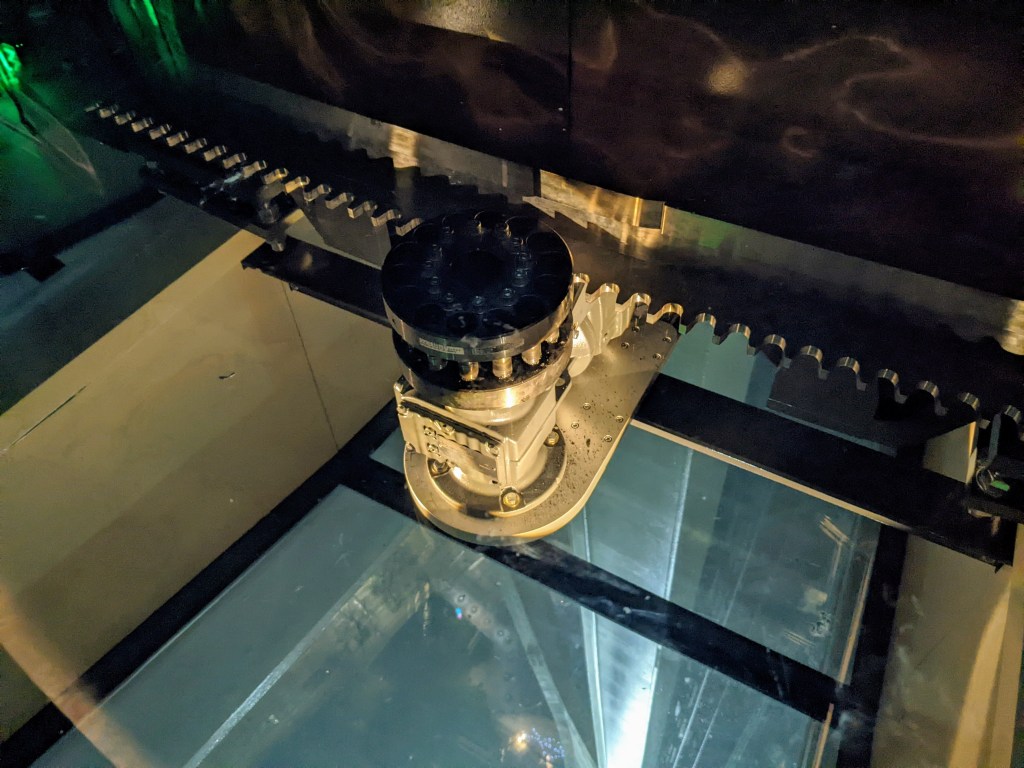
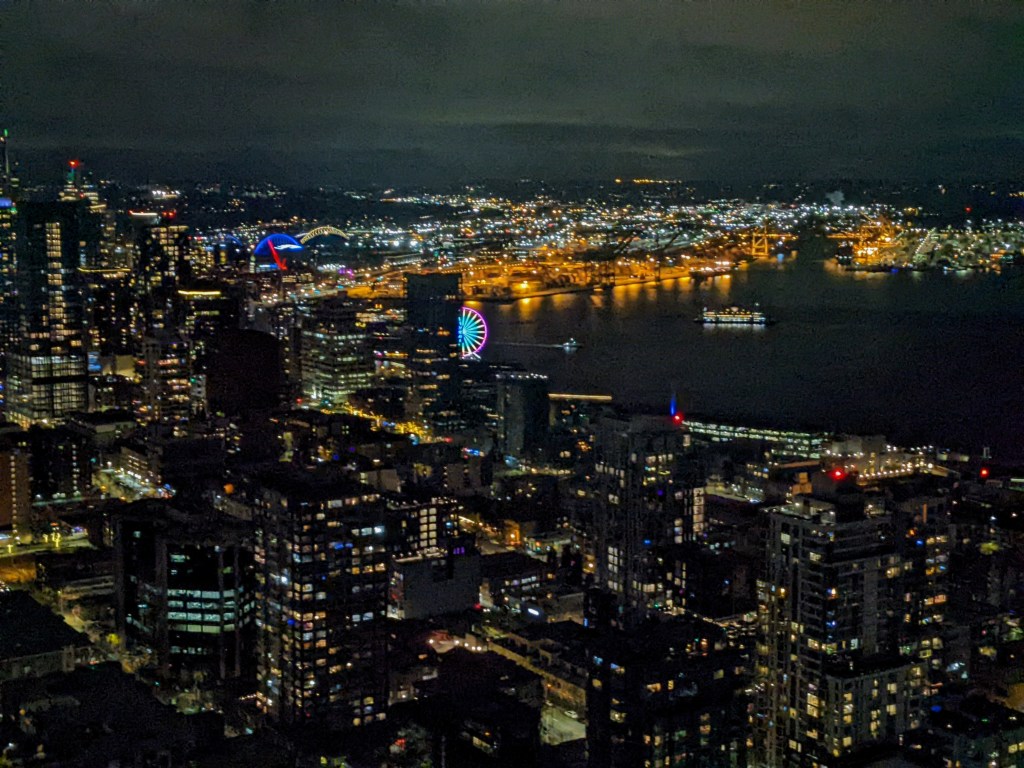
After getting a Lyft back to the hotel (our feet were a bit tired at that point), it was only a little after 8, but I was pooped! I intended to work more on this journal, but the battery in my computer had died and then I pretty much followed it!

 Strom Travel Diaries
Leave a reply to Elizabeth Strom Cancel reply